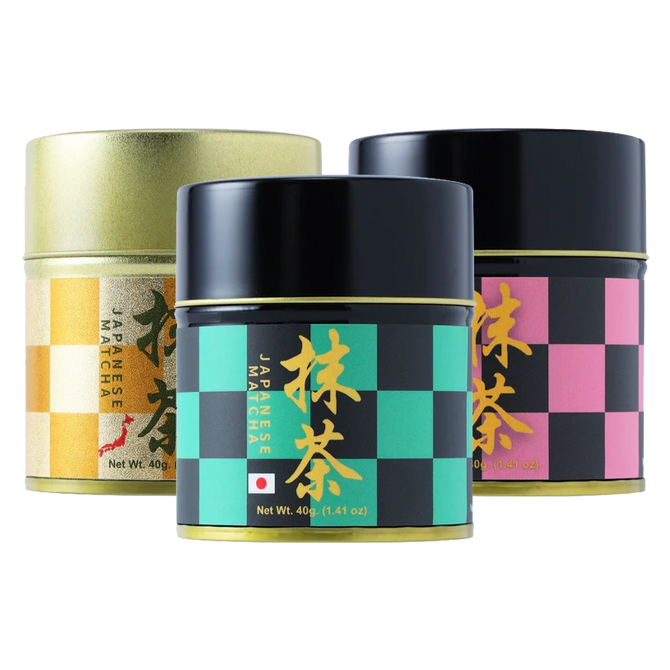
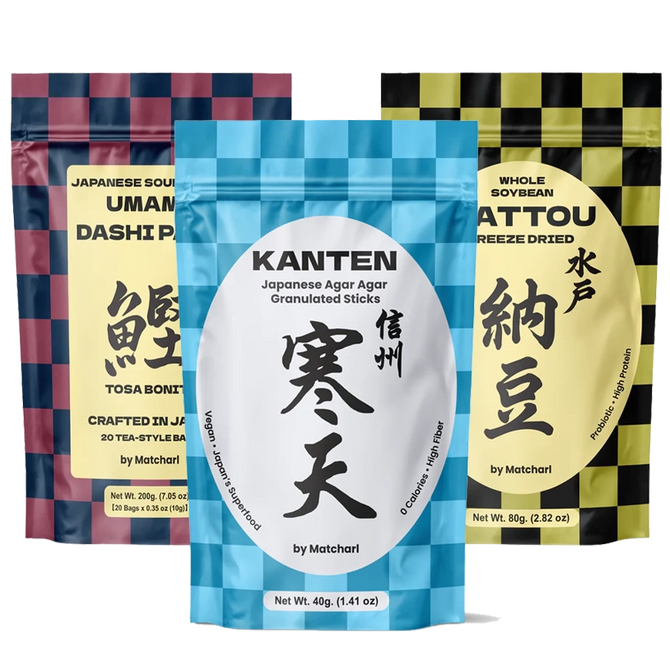


Our Matcha Collection
Vibrant, stone-ground powders sourced from Japan’s most prestigious tea estates.


Single Ingredient Japanese Staples. Supercharged for Your Health.
The essentials for a balanced and secret of Japanese Logevity


Products are also available on


The Art of Teinei (丁寧)
Teinei (丁寧) is the Japanese art of meticulous care. We honor this by delivering products from specialized regions that preserve the purity of the material and the integrity of the craft.
Community Voices
Appreciated by thousands of customers across the globe
Why Japanese Staples?

Clean Energy
L-Theanine in Matcha for focus without the crash.

Microbiome Support
Fermented Natto and Dashi for a healthy gut.

Plant-Based Purity
Kanten as a natural, mineral-rich alternative to gelatin.
From Soil to Soul: The Art of Traditional Japanese Nourishment
All you need to know about the benefits of our products and how we source them
![[Part 5] First Flush vs. Second Flush: How Harvest Timing Changes Matcha](http://matcharl.com/cdn/shop/articles/IMG_2758_9900007c-d403-4b06-ab34-ab7b82cec8cc.jpg?crop=center&height=12&v=1770869952&width=20)
[Part 5] First Flush vs. Second Flush: How Harvest Timing Changes Matcha
First flush and second flush matcha differ significantly in flavor, aroma, and value.This article explains how harvest timing shapes matcha quality and how to choose the right type for your...
![[Part 4] How Matcha Is Made: From Field to Bowl](http://matcharl.com/cdn/shop/articles/IMG_0089.jpg?crop=center&height=12&v=1770869968&width=20)
[Part 4] How Matcha Is Made: From Field to Bowl
How is matcha made?This article explains the complete matcha production process, from shaded tea cultivation and tencha processing to stone milling and preparation.
![[Part 3] Why Stone Milling Matters for Matcha Quality](http://matcharl.com/cdn/shop/articles/Matcha_Powder_-_TARO.jpg?crop=center&height=12&v=1770869895&width=20)
[Part 3] Why Stone Milling Matters for Matcha Quality
Stone milling plays a critical role in matcha quality.This article explains why traditional stone milling is still used today, how it affects texture and aroma, and what happens when matcha...