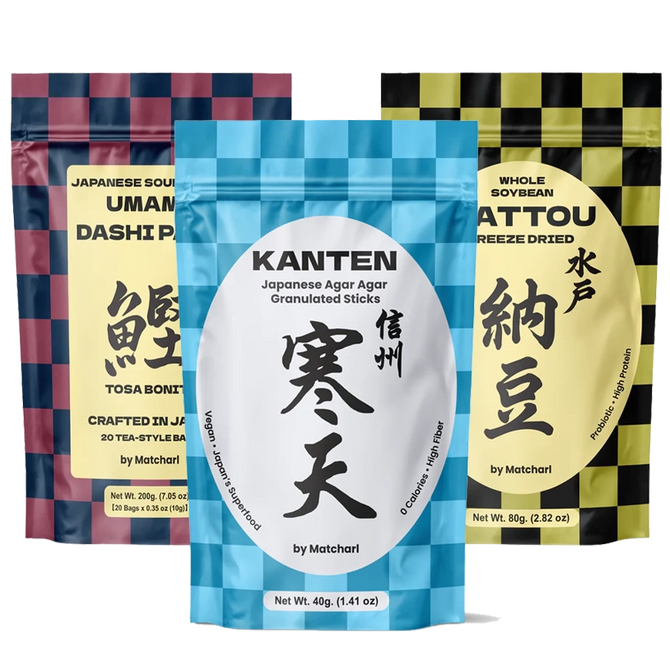


Agar vs Kanten: Are They the Same? Production Method and Texture Differences
Short answer: In English, “agar” is often the umbrella term, and kanten is commonly treated as agar. In Japan, however, people sometimes use “kanten” to mean a more traditional product with a distinct texture and processing style.
1) Why English recipes say “agar = kanten”
Most English-language cooking resources use “agar/agar-agar” for seaweed-based gelling in general. If your goal is simply “a plant-based gel that sets at room temperature,” this is usually fine.
2) Why Japan sometimes distinguishes “pure kanten”
Some explanations separate pure kanten as a more traditional Japanese form—often associated with specific seaweed sources and a classic processing method that influences texture.
3) Production method: the practical difference
- Traditional kanten: seaweed extract is set into a gel, then frozen and dried/dehydrated to remove water and create a shelf-stable product.
- General agar powder: produced through extraction, purification, and drying; characteristics can vary by seaweed source and processing.
4) Texture: what people mean when they say “different”
A helpful way to describe it for international readers:
- Agar-based jelly: often described as softer/wobblier
- Pure kanten: often described as firmer with a clean, delicate bite
Note: Actual texture depends strongly on brand, concentration, and recipe.
5) Which one should you buy?
- If you want classic Japanese-style firm cubes and clean bite, consider products labeled as kanten or pure kanten.
- If you want a general plant-based gelling agent for modern recipes, agar powder is typically fine.
6) What to read next
Next we’ll cover the biggest practical problem: why agar/kanten sometimes won’t set, and the fail-proof method.
Next: Why Your Agar (Kanten) Won’t Set: Fail-Proof Method + Ratios + Acid Fix
FAQ
Is kanten always stronger than agar?
Not always—strength depends on product quality, seaweed source, and processing. Use ratios and adjust by brand.


